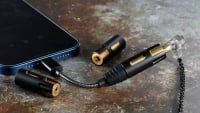
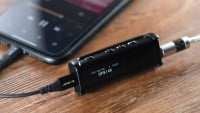
事隔兩年多的時間,Zorloo 為 Ztella 推出第二代了,名為 Ztella II。接駁訊源的一端依舊使用 USB Type-C,做到一插即用,可連接手機、iPad 或個人電腦等等;最大分別是接合耳機的一端,改用上 4.4mm 平衡輸出插口,而輸出功率比上代增強了不少,很容易就可感受得到強大的驅動力。


To the uninitiated, this looks like random keyboard mashing. To the seasoned warez scene historian or system administrator maintaining legacy air-gapped machines, it represents a specific, patched vulnerability chain involving three distinct activation threads (85, 86, and 88) that Petka exploited.
However, Petka alone wasn’t enough. Microsoft soon introduced —specific backend validation routines that checked not just the key format but also the installation ID (IID) against known "leaked" or "blacklisted" VLKs. Part 2: The Activation Thread Trinity – 85, 86, and 88 In the context of legacy Windows activation, a "thread" refers to a discrete algorithm or server-side validation pathway. When you called Microsoft’s activation hotline or used the slui interface, your Installation ID was fed into one of several computational threads. The thread number (85, 86, 88) determined the mathematical transformation applied to your product key before generating a confirmation ID (CID).
Petka’s weakness was that it initially generated keys that only satisfied validation. For a key to be fully "activated" (i.e., accepted by Windows Genuine Advantage later on), it needed to pass all three thread requirements sequentially when Microsoft’s servers performed a deep check. The "Activation Thread Requirement" Explained The phrase "activation thread requirement" in the keyword refers to the mandatory condition that a generated key must successfully compute valid confirmation IDs across Thread 85, 86, and 88 simultaneously. If a key failed any one of these threads, the activation would revert to a "reduced functionality mode" after 30 days.
Today, that patched requirement is obsolete. Windows no longer supports those threads, and Microsoft’s modern activation infrastructure has long since evolved. But for researchers, archivists, and anyone maintaining a legacy XP machine for industrial equipment, understanding this chain is crucial.
Unlike retail keys that required phone or internet activation against Microsoft’s servers, VLKs were designed for enterprises. They used a different algorithm—one that did not mandate per-machine activation. Petka exploited a weak pseudo-random number generator (PRNG) in Microsoft’s early VLK validation routine to produce keys that would bypass the Windows Product Activation (WPA) checks.
To the uninitiated, this looks like random keyboard mashing. To the seasoned warez scene historian or system administrator maintaining legacy air-gapped machines, it represents a specific, patched vulnerability chain involving three distinct activation threads (85, 86, and 88) that Petka exploited.
However, Petka alone wasn’t enough. Microsoft soon introduced —specific backend validation routines that checked not just the key format but also the installation ID (IID) against known "leaked" or "blacklisted" VLKs. Part 2: The Activation Thread Trinity – 85, 86, and 88 In the context of legacy Windows activation, a "thread" refers to a discrete algorithm or server-side validation pathway. When you called Microsoft’s activation hotline or used the slui interface, your Installation ID was fed into one of several computational threads. The thread number (85, 86, 88) determined the mathematical transformation applied to your product key before generating a confirmation ID (CID).
Petka’s weakness was that it initially generated keys that only satisfied validation. For a key to be fully "activated" (i.e., accepted by Windows Genuine Advantage later on), it needed to pass all three thread requirements sequentially when Microsoft’s servers performed a deep check. The "Activation Thread Requirement" Explained The phrase "activation thread requirement" in the keyword refers to the mandatory condition that a generated key must successfully compute valid confirmation IDs across Thread 85, 86, and 88 simultaneously. If a key failed any one of these threads, the activation would revert to a "reduced functionality mode" after 30 days.
Today, that patched requirement is obsolete. Windows no longer supports those threads, and Microsoft’s modern activation infrastructure has long since evolved. But for researchers, archivists, and anyone maintaining a legacy XP machine for industrial equipment, understanding this chain is crucial.
Unlike retail keys that required phone or internet activation against Microsoft’s servers, VLKs were designed for enterprises. They used a different algorithm—one that did not mandate per-machine activation. Petka exploited a weak pseudo-random number generator (PRNG) in Microsoft’s early VLK validation routine to produce keys that would bypass the Windows Product Activation (WPA) checks.