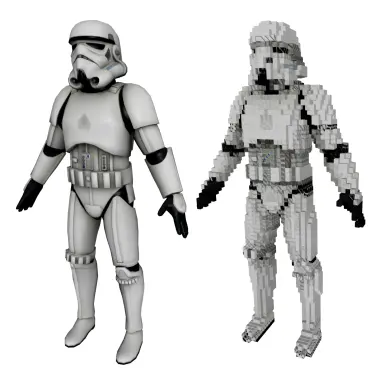
Use our free and fast online tool to convert your VSDX (Microsoft Visio) image or logo into 3D OBJ (Wavefront) mesh/model files suitable for printing with a 3D printer or for loading into your favorite 3D editing package.
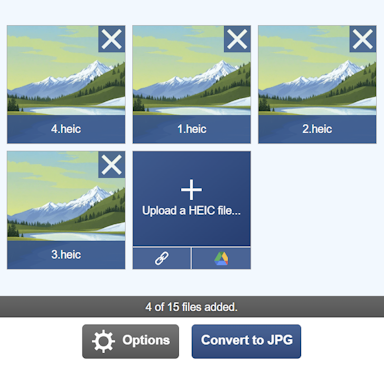
Here are three simple steps to create an OBJ file from a VSDX file.
Happy learning, and may your error gradients never vanish.
This clarity and directness is why, after two decades, the remains a coveted educational resource.
For students, researchers, and legacy system engineers, the search query for the represents more than just a file hunt; it is a quest for clarity, algorithmic purity, and hands-on learning that modern high-level libraries often obscure. This article explores why this specific book remains relevant, what you will learn from it, and how its MATLAB 6.0-centric approach provides a timeless education in neural network fundamentals. Why MATLAB 6.0? The Case for a "Legacy" Tool At first glance, MATLAB 6.0 (released around 2000-2001) seems archaic. Modern users have R2024b with deep learning toolboxes that can build Transformers in three lines of code. So why seek out a PDF focused on an older version?
% P. 145 - Backpropagation for XOR (Sivanandam) p = [0 0 1 1; 0 1 0 1]; % Input t = [0 1 1 0]; % Target (XOR) % Create network (MATLAB 6.0 style) net = newff(minmax(p), [2 1], {'tansig' 'purelin'}, 'traingd');
% Train and simulate net = train(net, p, t); out = sim(net, p); disp('Output:'); disp(out);

| Extension | VSDX |
| Full Name | Microsoft Visio |
| Type | Vector |
| Mime Type | application/octet-stream |
| Format | Binary |
| Tools | VSDX Converters, VSDX Viewer |
| Open With | Inkscape |
The VSDX format is the official file format used by Microsoft Visio, an application specializing in creating floor plans, flow charts, organization charts, and other vector-based charts.
The format has been around since the early 1990s, and like other Microsoft applications, VSDX files have evolved over the years. VSDX files can be opened in Microsoft Visio, and many other vector-based programs offer support for importing VSDX files for editing. Happy learning, and may your error gradients never vanish
| Extension | OBJ |
| Full Name | Wavefront |
| Type | 3D Model |
| Mime Type | text/plain |
| Format | Text |
| Tools | OBJ Converters, 3D Model Voxelizer, Create OBJ Animation, Compress OBJ, OBJ Asset Extractor, Text to OBJ, OBJ Viewer |
| Open With | Daz Studio, MeshLab, CAD Assistant |
The OBJ file format, originally created by Wavefront Technologies and later adopted by many other 3D software vendors, is a simple text-based file format for describing 3D models/geometry. This data can include vertices, faces, normals, texture coordinates, and references to external texture files. This article explores why this specific book remains
As the format is text-based, it is relatively straightforward to parse in 3D modeling applications. A downside of the text-based format is that the files can be rather large compared to similar binary formats such as STL and compressed files such as 3MF. Modern users have R2024b with deep learning toolboxes
Our tool will save any material and texture files separately; these additional files will be included with your final OBJ file at the time of download.
Happy learning, and may your error gradients never vanish.
This clarity and directness is why, after two decades, the remains a coveted educational resource.
For students, researchers, and legacy system engineers, the search query for the represents more than just a file hunt; it is a quest for clarity, algorithmic purity, and hands-on learning that modern high-level libraries often obscure. This article explores why this specific book remains relevant, what you will learn from it, and how its MATLAB 6.0-centric approach provides a timeless education in neural network fundamentals. Why MATLAB 6.0? The Case for a "Legacy" Tool At first glance, MATLAB 6.0 (released around 2000-2001) seems archaic. Modern users have R2024b with deep learning toolboxes that can build Transformers in three lines of code. So why seek out a PDF focused on an older version?
% P. 145 - Backpropagation for XOR (Sivanandam) p = [0 0 1 1; 0 1 0 1]; % Input t = [0 1 1 0]; % Target (XOR) % Create network (MATLAB 6.0 style) net = newff(minmax(p), [2 1], {'tansig' 'purelin'}, 'traingd');
% Train and simulate net = train(net, p, t); out = sim(net, p); disp('Output:'); disp(out);

© 2026 ImageToStl. Convert your PNG and JPG Files to 3D STL files.